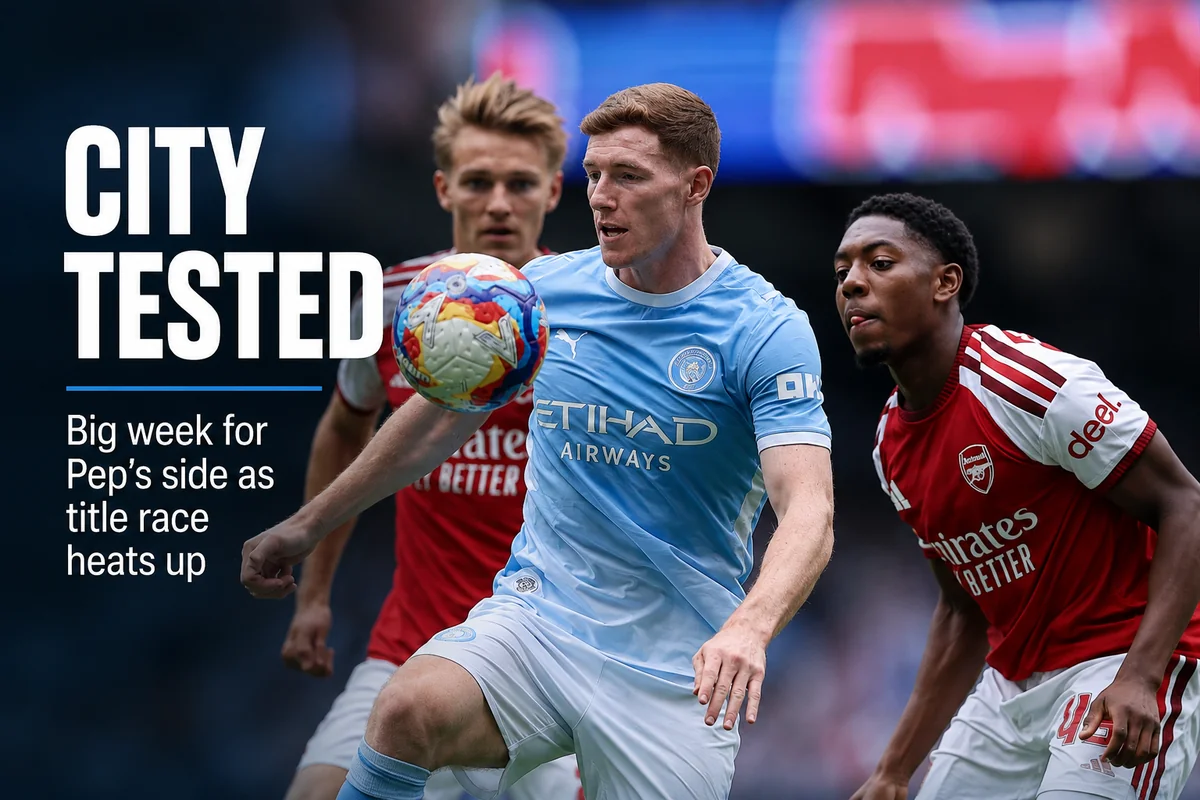
Taking the Manchester City job after Pep Guardiola was always going to be the hardest appointment in English football. Enzo Maresca accepted it, and then the ground moved again: Rodri — the player who made City's system function — left for Barcelona. The 2026-27 season is the first genuine test of whether the machine or the man was doing the work.
Key takeaways
- Enzo Maresca, 46, succeeds Guardiola — arriving with a Championship title, a Conference League and a Club World Cup on his CV.
- Rodri has joined Barcelona after captaining Spain to the World Cup and being named player of the tournament.
- John Stones, Nathan Aké and Bernardo Silva have also left; Elliot Anderson arrives for £116m from Nottingham Forest.
- The 130 Premier League charges remain unresolved more than three years on; City continue to deny wrongdoing.
- Set pieces are the tactical weak point: City shipped more league goals from dead balls last season than in the previous two combined.
A squad rebuilt in the wrong places
The departures are not routine squad churn. Rodri at 30 is arguably the best controlling midfielder in the world and may collect a second Ballon d'Or off the back of Spain's World Cup win — a player who dictated the tempo of Premier League afternoons and Champions League nights alike. Losing him is not a hole in a position; it is a hole in a method.
Behind him, Stones and Aké take with them years of accumulated understanding in a back line built on very specific habits, while Bernardo Silva's exit removes the squad's most reliable problem-solver. That is a lot of institutional memory to lose in one window, and Maresca has to replace it while also being new himself.
The compensations are real but unproven together. Erling Haaland remains the most efficient centre-forward in the division and will start as favourite for a fourth Golden Boot in five seasons. Phil Foden, freshly rewarded with a substantial new deal, is the variable — brilliant when the team is set up to feed him, peripheral when it is not. Whether he and Rayan Cherki can share the same creative space is one of the more interesting questions of the opening months.
"It's fantastic, nice and exciting, and for me, a privilege. The most important thing has been that Khaldoon, Hugo and Ferran all speak the same language: this is a club that has to win games and titles and has to compete — but we also talk about how we can keep making the club better, season after season."
— Enzo Maresca on taking the City job
The £116m bet on Elliot Anderson
Rodri's exit hands Anderson the most valuable job in English club football: running Manchester City's midfield. The fee says the club have no doubts. The career path invites a few, given the Whitley Bay midfielder spent five senior years at Newcastle without ever locking down a starting place before Nottingham Forest turned him into an England international.
The World Cup offered the evidence in his favour. There were passages where Anderson looked like a genuine long-range distributor — the expansive, game-shifting pass — as well as the short, relentless circulation that keeps possession sides breathing. Doing that in a tournament is not the same as doing it every week with the ball for 65% of the match and an opponent camped on the edge of their box. It is, either way, the defining opportunity of his career.
The flaw Maresca has not yet solved anywhere
The most concrete tactical problem waiting for him is dead balls. City conceded more league goals from set pieces last season than across the two previous campaigns put together, and the damage was not cosmetic — the winning goals in defeats at Aston Villa and Newcastle both came from corners.
Awkwardly, this is not an area where the new manager arrives as the specialist. His Chelsea side conceded from a set play roughly every third league game, a marginally worse rate than the City team he has just inherited. Two set-piece vulnerabilities do not cancel out.
The numbers behind the season
- £116m — the fee for Elliot Anderson, City's headline arrival.
- 61,000 — new Etihad capacity after the Pep Guardiola Stand opened, up from 53,400.
- 130 — outstanding Premier League charges, all denied by the club.
- 4,000 — new pay-as-you-go flexi season tickets, sold out; half of them junior.
- 2nd — where the consensus of pundits expects City to finish.
Off the pitch: an exemplary club with one asterisk
As an organisation, City are the template — recruitment, infrastructure, medical, analytics, the lot. The single qualifier is the legal one. The 130 alleged breaches of Premier League rules were announced more than three years ago and still have not been resolved. City deny all of it, and until a verdict lands, every assessment of the club's operating model carries a footnote nobody can remove.
The physical change is more straightforward. The Pep Guardiola Stand — opened, fittingly, for his final home match — has lifted the Etihad's capacity to 61,000, a jump of more than 7,000 seats on the previous figure.
The relationship with the stands
Sheikh Mansour's ownership is not a subject of debate among City supporters; it delivered the most successful era in the club's history and is treated accordingly. What has kept the goodwill topped up recently is pricing. Season tickets have been frozen for a third year running — increasingly unusual in the Premier League — and the new stand carries 4,000 flexible, pay-as-you-go season tickets that sold out, with half allocated to junior supporters.
There is also a £10 ticket scheme for residents of the five wards surrounding the ground. Small in revenue terms, significant in the argument about whether elite clubs still belong to the neighbourhoods they sit in.
One to watch: Vitor Reis
Signed in January 2025, the Brazilian defender's City career so far amounts to a handful of appearances and one genuinely rough afternoon — hauled off at half-time as a 19-year-old with City losing at Leyton Orient in the FA Cup. He played the full 3-1 win in the next round, got 89 minutes into a league game at Leicester before a late cameo, and completed a Club World Cup win over Wydad Casablanca. A loan at sister club Girona ended in relegation, yet the reports on him personally were positive. With Stones and Aké gone, the door is open.
What the World Cup changed
For Rodri, the tournament was a coronation: captain of the winners and player of the competition, the complete version of a footballer's ambition — and, from City's perspective, the peak valuation of a man who then left. For Cherki it was the opposite kind of summer, six substitute appearances and a single start for a France side eliminated by Spain in the semi-finals. Given his ability to change a game with either foot, that is a puzzling return, and it makes his first full season under Maresca all the more interesting.
The bottom line
Maresca has not been handed a rebuild — he has been handed a dynasty with its two load-bearing pillars removed. The forward line is still the best in the league, the club is still run better than almost any of its rivals, and the expectation is still a title challenge. But the midfield now depends on a £116m player who has never done this job, the defence is being remade, and the set-piece weakness follows both club and coach. Second place is the consensus. Anything above it would be the most impressive first season any City manager has had.