Paolo Maldini lasted 16 days. Brought in to rebuild an Italy side that has now missed three World Cups in a row, he and his adviser Leonardo resigned on Monday after federation president Giovanni Malagò vetoed their chosen head coach. Italian football's attempt to fix itself collapsed before it had appointed a single manager.
Key takeaways
- Maldini was appointed FIGC technical director on 11 July and resigned on 27 July.
- Leonardo, brought in as his special adviser, walked out alongside him.
- Their pick, Andrea Pirlo, was blocked over his ambassador role with Russian bookmaker Fonbet.
- Guardiola and Ancelotti had already turned the job down; Italy remain without a head coach.
When Paolo Maldini took the technical director's job at the Italian federation on 11 July, it was presented as the serious answer to a serious problem. Italy had failed to reach a third consecutive World Cup. Gennaro Gattuso had gone. The national game was being described, without much argument, as being at its lowest ebb in close to forty years. Maldini brought Leonardo with him as a special adviser, and the pair were handed the most urgent task on the desk: find the next head coach.
Sixteen days later they were both gone, and Italy still does not have one.
The shortlist that kept shrinking
The search did not go well from the start. Pep Guardiola was sounded out and said no. Carlo Ancelotti, the other obvious name for a federation hoping to buy instant credibility, also declined. Two of the most decorated coaches in the game had looked at the Italy job — historically one of the most prestigious posts in football — and passed.
That is worth sitting with for a moment. The vacancy is not short of romance, but it now comes attached to a squad that cannot qualify for tournaments and a governing body in visible disarray. The elite are choosing to wait it out.
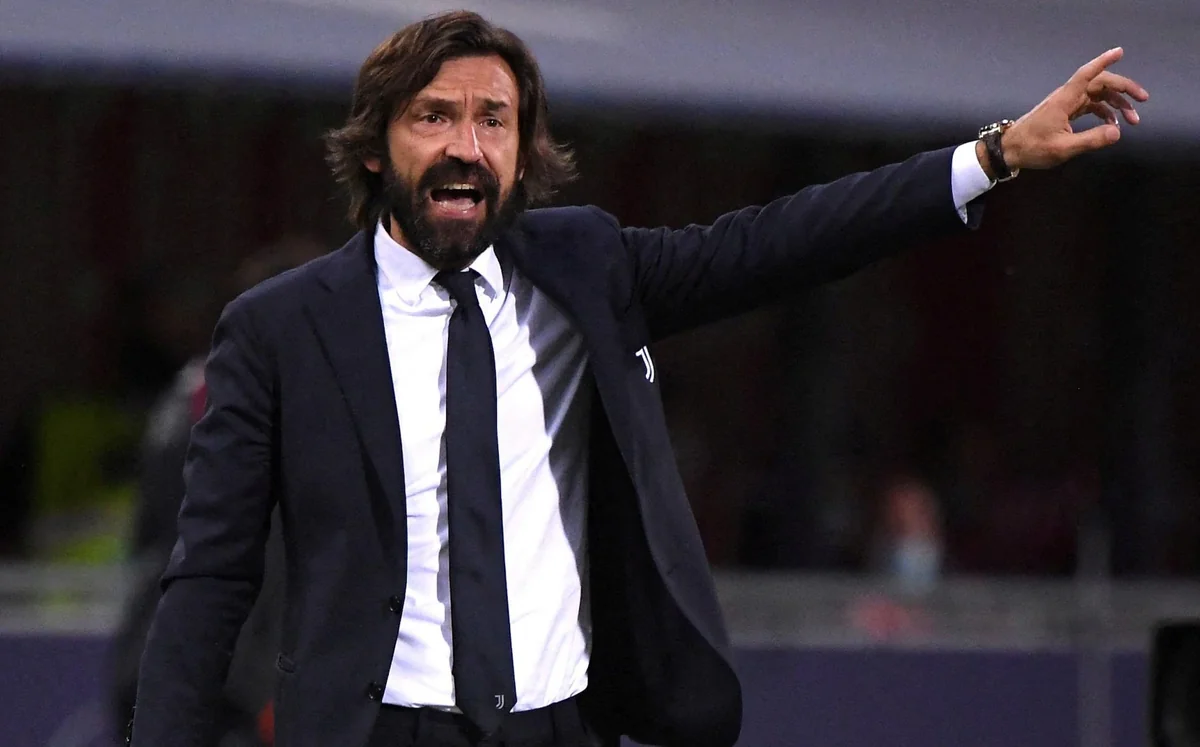
With the marquee options closed off, Maldini turned to Andrea Pirlo — a World Cup winner as a player, a coach whose managerial record is far patchier, but someone who fit the idea of a reset built around people who understand the shirt.
The Fonbet problem
Pirlo's candidacy ran into an obstacle that had nothing to do with tactics. He serves as a global brand ambassador for Fonbet, a Russian betting company — and Italy operates a ban on gambling advertising. What began as an awkward look quickly became a question of whether the appointment was even legally workable, and the reaction across Italian football and the domestic media was fierce.
"Decision to leave the project just days after joining, due to president Malagò being against appointing Andrea Pirlo."
— Fabrizio Romano, on the resignations
Federation president Giovanni Malagò, himself newly installed, moved to block the appointment. Maldini and Leonardo pushed back. Malagò did not move. Reported by Sky Sport Italia on Monday, the outcome was the resignation of both men — a technical director and his adviser walking away rather than accept a veto on the single decision they had been hired to make.
The timeline
- 11 July — Maldini appointed FIGC technical director, Leonardo joins as adviser.
- Mid-July — Guardiola and Ancelotti both decline the head coach role.
- Late July — Pirlo emerges as Maldini's pick; the Fonbet link triggers a backlash.
- 27 July — Malagò vetoes the appointment; Maldini and Leonardo resign.
Who was actually right?
The uncomfortable part of this story is that both sides have a defensible case.
Malagò was being asked to install a national team coach with a live commercial relationship to a Russian bookmaker, in a country that bans gambling advertising, at a moment when the federation can least afford another scandal. Blocking it is not obviously unreasonable. If anything, the question is why the conflict was not identified and settled before Pirlo's name reached the point of public discussion.
Maldini's position is just as understandable. He was recruited to exercise judgement over exactly this kind of decision. Having watched two elite candidates decline the job, he landed on a third, and was overruled by a president who had appointed him a fortnight earlier. A technical director who cannot choose the coach is a technical director in name only.
What the episode really exposes is that nobody agreed in advance who held the authority. That is a governance failure, and it happened at the exact moment the federation was advertising itself as reformed.
Where Italy goes from here
The immediate position is bleak: no head coach, no technical director, no adviser, and a president whose first significant intervention cost him two of his own appointments. Roberto Mancini, Antonio Conte and Thiago Motta have been floated as alternatives, but none is in concrete talks and the reporting on all three remains speculative.
The deeper problem is one of attraction. Italy needs a coach of genuine standing to restore belief, but the past three weeks have advertised a federation where the lines of authority are unclear and internal disputes become public within days. That is not a pitch that helps recruit the kind of name Malagò now badly needs.
Italian football has emerged from worse. But it has rarely looked this disorganised while trying to.