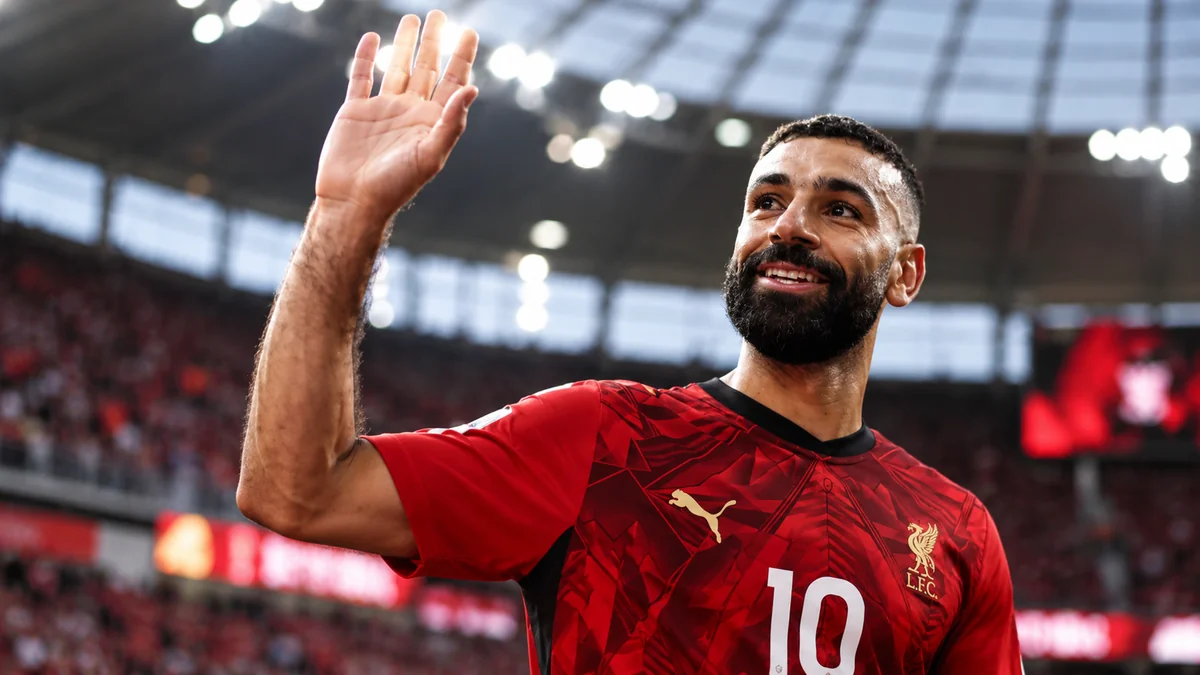
For Mohamed Salah — and for an entire nation — the long, painful wait is finally over. At the ninth time of asking, Egypt have their first World Cup victory, and it was their talisman who dragged them there.
Key takeaways
- Egypt claim their first-ever World Cup win at the ninth attempt, a 3-1 victory over New Zealand.
- Mohamed Salah broke the deadlock in the 67th minute and set up Trezeguet's clinching header.
- A single point against Iran will send Egypt into the last 32.
- The strike was Salah's 68th goal in 118 caps, one short of Hossam Hassan's all-time record.
A commanding second-half showing from the Egyptian King against New Zealand powered the Pharaohs to a historic 3-1 win, leaving them on the verge of reaching the last 32. Salah broke the deadlock in the 67th minute — after Egypt had recovered from a shock early opener from the Kiwis — before whipping in the corner that Trezeguet headed home to put the result beyond doubt.
It had not been a smooth start to the tournament for the 34-year-old. A flat display in the opening draw with Belgium was followed by a quiet first half against New Zealand, and the doubts were creeping back in. Then, just as his personal World Cup nightmares looked set to repeat themselves, Salah stepped up — joining Lionel Messi, Kylian Mbappé, Erling Haaland and Harry Kane on the list of superstars to leave their mark on this World Cup.
After a forgettable 2018 campaign and the heartbreak of missing out on Qatar four years later, Egypt's finest player has at last delivered on the biggest stage. And he knows the job is nearly done: a single point against Iran will carry his country into the next round — and they may not even need it.
"It's a great achievement for all the players. It's a great win. It's a great vibe. The next game is very important."
— Mohamed Salah
Bust-ups, injuries and old ghosts
The road here was anything but kind. Salah's club future remains unsettled after a difficult final season at Liverpool, which saw him fall out with then-manager Arne Slot before confirming his summer departure. Linked with clubs around the world, he chose to park all of it and pour his focus into righting Egypt's past wrongs.
Those wrongs run deep. In 2018, a race against injury left him on the bench for the opening defeat to Uruguay; his penalty was only a consolation in a 3-1 loss to hosts Russia, and a humiliating defeat to Saudi Arabia followed. The fallout was bitter — Salah publicly criticised Egypt's FA over disrupted preparations, with reports he came close to walking away from international football altogether.
Failure to qualify for Qatar deepened the gloom, and after 45 flat minutes on Sunday it looked as though the misery would drag on. Manager Hossam Hassan had even spoken before kick-off to deny a rift with Salah after substituting him against Belgium. Instead, with the Iran game looming as a last-chance saloon, the forward took the game into his own hands and set off celebrations among Egyptian fans across the globe.
"He stood up for his country"
Salah was a superstar at Liverpool. In Egypt, he exists on another plane entirely — every touch met with a roar, every appearance carrying the weight of a nation's hopes.
Sunday's strike was his 68th goal in 118 caps, leaving him just one short of Hassan's all-time scoring record — and few will have mattered more, ending a 92-year wait for a World Cup win. No player has been involved in more shots in a single game at this tournament: five of his own, and five more created for teammates.
"Just when he was needed, Mo Salah stood up for his country."
— Jobi McAnuff, former Jamaica winger
Ex-Tottenham boss Ange Postecoglou agreed, telling ITV: "If there was any doubt about Mo's impact on this team, you can still see it. It will give them enormous belief. They had to deal with adversity and their big player stood up — and that will give them big confidence. You need your big players to perform to progress."
His standing back home is hard to overstate; he has worn the senior shirt for 14 years, and even government ministers have intervened over his fitness. "I even had calls from Egypt's Minister of Health," recalls national team doctor Mohamed Aboud, remembering the shoulder injury Salah suffered in Liverpool's 2018 Champions League final defeat to Real Madrid that threatened his place in that summer's World Cup.
Yet for all his Premier League glory — titles in 2019-20 and 2024-25 — a trophy with the national team has eluded him. The generation before his swept three straight Africa Cup of Nations crowns between 2006 and 2010; since then there have been only two final defeats, to Cameroon in 2017 and Senegal in 2021. This victory does not erase all of that — but it does banish one of Egypt's oldest ghosts.